Melanoma and Skin Cancer

Why choose Ochsner for melanoma and skin cancer care?

Ochsner Health treats all types of skin cancer, including melanoma, in convenient locations across New Orleans, Shreveport, Lafayette, Covington and Crowley, Louisiana, as well as in Meridian, Mississippi. Ochsner's team of specialists provides expert, personalized care for basal cell carcinoma, squamous cell carcinoma, and malignant melanoma, guiding patients from diagnosis through treatment, long-term follow-up, and survivorship.

Ochsner specialists screen skin for any indications of skin cancer or tumors. Ochsner provides total body screens and biopsies when necessary.

Skin cancer screening is generally recommended for people at increased risk for developing skin cancer. Not everyone with risk factors develops skin cancer. However, if you do have one or more risk factors, discuss them with your healthcare provider and get regular skin cancer screenings.

The earlier skin cancer is found, the better the chance of it being treated successfully.

If you are at high risk for skin cancer, your dermatologist can help you determine how frequently you need screenings.

Ochsner's team includes dermatologists who are experts in identifying and treating skin cancer, including basal cell carcinoma, squamous cell carcinoma and malignant melanoma. They can also evaluate changes in pigmented spots or new red bumps that bleed. 

In many cases, dermatologists can remove skin cancers using standard surgical techniques. Some procedures are quick and can be done in the clinic, while others may require more involved care.

For patients with malignant melanoma, dermatologic surgeons work closely with plastic surgeons and surgical oncologists to provide treatment.

Ochsner's treatment options include specialized therapies like:

  • psoralen ultraviolet A (PUVA) therapy - combines medicine and UVA light to treat skin cancer
  • photophoresis - treats blood with light and medicine to boost the immune system 
  • total skin electron beam treatment - uses radiation to target cancer on the skin's surface.

Ochsner MD Anderson Cancer Center at The Gayle and Tom Benson Cancer Center in New Orleans was the first hospital in Louisiana to offer tumor-infiltrating lymphocytes (TIL) therapy for adults with advanced melanoma.

Advanced melanoma is a form of skin cancer that has spread from where it originated in the body. TIL therapy is a form of immunotherapy that uses a patient’s own immune cells to fight cancer.

How TIL therapy works

During treatment, surgeons remove a piece of the cancerous tumor and isolate the lymphocytes from the tumor. Lymphocytes are cells that have the ability to identify and fight cancer cells.

In a laboratory, these lymphocytes are activated and multiplied to be administered back into the patient.

Once the TILs are ready, patients are admitted to the hospital to receive a preparative chemotherapy regimen, then the cancer-fighting cells are infused back into the patient. Patients then receive a growth factor, growing an army of lymphocytes to seek out and destroy tumor cells.  

FAQs

The five signs of melanoma are captured by the ABCDE rule:

Asymmetry, Border, Color, Diameter and Evolving. 

Here is what to look for: 

Asymmetry: One half of the mole does not match the other half in shape or size. 

Border: The edges are irregular, ragged, notched or blurred rather than smooth and even. 

Color: The mole contains multiple shades, including brown, black, red, white or blue. 

Diameter: The spot is larger than 6 millimeters across — roughly the size of a pencil eraser — though melanomas can be smaller when first detected. 

Evolving: The mole is changing in size, shape, color or any other characteristic, or a new symptom such as bleeding or itching develops. 

If you notice any of these warning signs, contact your doctor promptly for an evaluation.

Melanoma most commonly develops on areas of the skin that receive frequent sun exposure, including the back, legs, arms and face. However, melanoma can appear anywhere on the body, including areas that rarely see the sun. In men, it most often develops on the back. In women, it more frequently appears on the legs. Melanoma can also form under fingernails or toenails, on the palms of the hands, the soles of the feet and even inside the mouth or eyes — areas many people do not think to check. Regular, full-body skin exams are important for catching melanoma early, no matter where it develops.

In its earliest stage, melanoma often looks like a new or changing mole, freckle or dark spot on the skin. Early-stage melanomas are typically flat and small, with an uneven or irregular border. They may appear brown or black, but some early melanomas show multiple colors or may even appear pink, red or skin-toned. Because early melanomas can be easy to overlook or mistake for a harmless spot, annual skin checks with a dermatologist are one of the most reliable ways to detect changes before they progress.

The early signs of skin cancer vary depending on the type, but they often include new growths, sores that do not heal or changes to existing moles or spots. You may notice a pearly or waxy bump on the face, ears or neck, which is common in basal cell carcinoma, or a flat, flesh-colored or brown scar-like lesion on the chest or back. Squamous cell carcinoma often appears as a firm, red nodule on the face, lip, ears, hands or arms. Other warning signs include a rough, scaly patch of skin that may crust or bleed, a new spot or growth that looks different from the surrounding skin, or a sore that bleeds, scabs over and repeatedly heals and reopens. Skin cancer is highly treatable when caught early. If you notice any unusual changes to your skin, schedule an appointment with a dermatologist as soon as possible. The team at Ochsner Health is here to help you get the care you need.

Read more healthy living and lifestyle tips.

Get tips in your inbox.

Sign up for our free newsletters to get the best of our healthy living tips delivered straight to your inbox.

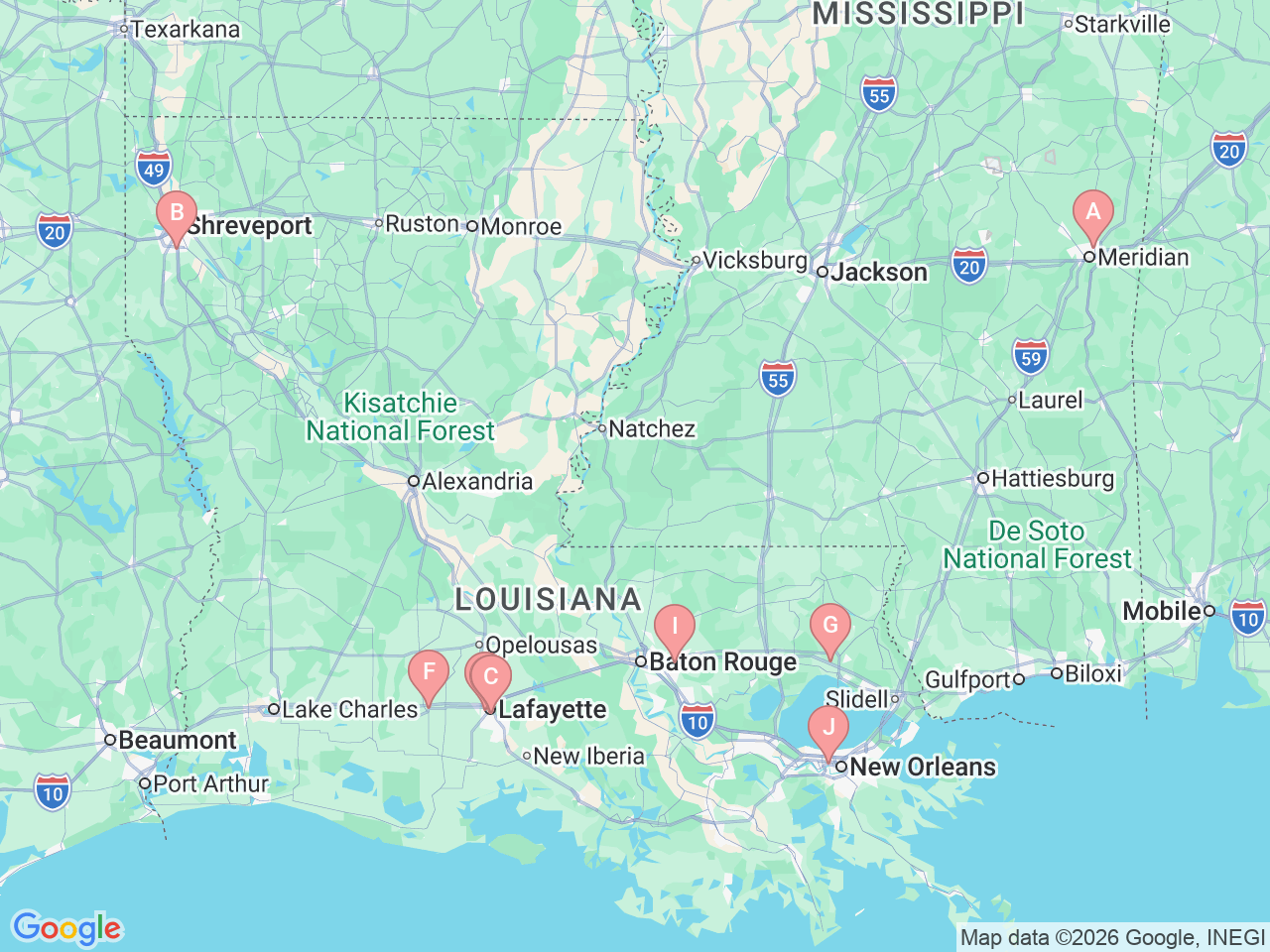
Map of Ochsner-affiliated facilities that provide services related to Melanoma and Skin Cancer

Melanoma and Skin Cancer Locations

Ochsner Rush Center for Dermatology

4331 Highway 39 North
Meridian, MS 39301
  • Monday–Thursday: 8 a.m.-5 p.m.
  • Friday: 8 a.m.-noon

Ochsner LSU Health Shreveport - Cancer Treatment Center

301 Bert Kouns Industrial Loop
Shreveport, LA 71106
  • Monday – Friday: 7:30 a.m.-4 p.m.

Ochsner Cancer Center of Acadiana at Ochsner Lafayette General Medical Center

1211 Coolidge St.
Lafayette, LA 70503
  • Monday–Thursday: 8 a.m.-4:30 p.m.
  • Friday: 8 a.m.-3 p.m.

Ochsner University Hospital & Clinics | Lafayette

2390 West Congress St.
Lafayette, LA 70506
  • Open 24/7

Ochsner Lafayette General Surgical Hospital

1000 West Pinhook Road
Lafayette, LA 70503
  • Open 24/7

Ochsner Acadia General Hospital

1305 Crowley Rayne Highway
Crowley, LA 70526
  • Open 24/7

St. Tammany Cancer Center - A Campus of Ochsner Medical Center

900 Ochsner Blvd.
Covington, LA 70433
  • Mon – Fri: 7 a.m.-6 p.m.

Ochsner Lafayette General Medical Center

1214 Coolidge St.
Lafayette, LA 70503
  • Open 24/7

Ochsner Cancer Center - Baton Rouge

17050 Medical Center Drive
Baton Rouge, LA 70816

The Gayle and Tom Benson Cancer Center

1515 River Road
Jefferson, LA 70121
  • Monday – Friday: 8 a.m.-5 p.m.