About Ochsner
Ochsner Health is the leading nonprofit healthcare provider in the Gulf South. Ochsner inspires healthier lives and stronger communities through our mission to serve, heal, lead, educate and innovate.
With advanced, personalized treatments and cutting-edge technology, our oncology experts at the Ochsner MD Anderson Cancer Center ensure the best possible outcomes for your patients. Ochsner is the first and only provider in Louisiana with a fully integrated cancer program based on MD Anderson’s standards and treatment plans. Ochsner MD Anderson Cancer Center provides patients with access to cancer treatments that are among the most advanced in the nation.

According to the National Cancer Institute, nearly 90,000 adolescents and young adults (AYAs)—people ages 15 to 39—are diagnosed with cancer annually. A 2024 study found that the U.S. is home to more than 2.1 million cancer survivors who were diagnosed as AYAs. Compared with cancer survivors in other age groups, AYA survivors face distinct challenges and have unique needs. For more than a decade, Ochsner Health has been at the forefront of caring for these patients, and pediatric hematologist/oncologist Robert Vasquez Jr., MD, PhD, has helped lead the charge.
Dr. Vasquez came to pediatric oncology unexpectedly, having initially intended to become an adult oncologist. Inspired by the high cure rates in pediatric cancer, he trained at the University of Chicago, which was home to a robust AYA cancer program. After joining Ochsner, he founded its AYA Cancer and Survivor program in the mid-2010s, a time when few such programs existed nationwide.
“The concept of cancer survivorship and the AYA patient population kind of evolved together,” Dr. Vasquez said. “The idea of and emphasis on pediatric survivorship has been around longer than adult survivorship, for somewhat obvious reasons. Kids are young when they’re treated for cancer. We know some of the therapies we use are toxic and have potential harms associated with them that we need to watch for over a long period of time.”
Young cancer survivors must grapple with issues such as preserving fertility, finishing education, starting careers and navigating budding personal relationships that older survivors do not face. All the while, survivors and their medical providers must prevent or manage complications from ever-evolving treatments. For example, Dr. Vasquez points to the chemotherapy medicine doxorubicin, which can have cardiotoxic effects during, shortly after or years after treatment.
“Monitoring for heart damage from doxorubicin is included in our pediatric survivorship guidelines,” he said. “For some patients at higher risk, we have to decide whether to start treatment prophylactically to prevent cardiac complications. We have to make that decision with many of the agents we use.”
Over the course of more than a decade, Dr. Vasquez and his colleagues have built the Ochsner AYA program into a vital component of cancer care within the health system.
“The goal of the program is not just to support survivorship, but also to provide comprehensive care for AYA patients,” Dr. Vasquez said. “These include newly diagnosed patients, those from the adult cancer side who would receive most of their care from adult-focused clinicians and survivors who were diagnosed in the AYA age group. A key reason for our comprehensive approach is the dramatically different psychosocial needs of the AYA population relative to the adult patient population.”
Another reason, Dr. Vasquez says, is the evidence from the past two decades showing that many cancers in the AYA population behave and respond to treatment more like pediatric cancers than adult cancers. He points to acute lymphoblastic leukemia (ALL) as a prime example where pediatric-style therapy became the standard of care for the AYA population. As a result, pediatric oncologists, such as those in the AYA program, are well-positioned to care for both AYA and adult patients with ALL, and the program is ideally suited to help AYAs navigate their unique needs during survivorship.
In a time when health systems’ adult and pediatric hospitals often occupy separate campuses, Ochsner is an outlier, to the benefit of AYA patients. Ochsner Children’s Hospital shares its campus with Ochsner Medical Center - New Orleans, home of The Gayle and Tom Benson Cancer Center. That center, in turn, is part of the Ochsner MD Anderson Cancer Center. Having adult and pediatric care on one campus facilitates collaboration.
“I meet weekly with the adult oncologists to discuss patients,” Dr. Vasquez said. “They frequently send newly diagnosed ALL patients in their 20s to me. We share the care of patients undergoing stem cell and bone marrow transplants. Thanks to Ochsner’s extensive resources, I can, for example, refer a 25-year-old cancer survivor to an adult cardiologist, or I can send an 18-year-old patient to a pediatric cardiologist, whatever best fits the patient’s needs.”
Twice a month, Dr. Vasquez and a multidisciplinary team host a clinic for AYA patients who are newly diagnosed, undergoing treatment or are post-treatment survivors. Patients can meet with a pediatric oncologist, an adult oncologist, an exercise counselor, a dietitian and a social worker in one visit, at which time they can receive referrals to pediatric or adult specialists. The one-stop clinic is a boon for patients who travel long distances for care.
Dr. Vasquez sees Ochsner’s AYA program continuing to play a leading role in the field, including by participating in clinical trials through the Children’s Oncology Group. Previously, he says, the siloed nature of pediatric and adult oncology left AYA patients diagnosed on the adult side unaware of available pediatric trials for which they might qualify. That is changing, thanks in part to the kind of collaborative oncologic care Ochsner provides.
“Traditionally, AYA patients weren’t really taking part in studies,” Dr. Vasquez said. “They participated at far lower rates than pediatric patients. Now, AYA participation is rising because pediatric oncologists are working more with adult oncologists, and more AYA centers and programs like ours exist.”
Dr. Vasquez envisions Ochsner creating more transition-of-care programs for AYA patients, such as those with diabetes and sickle cell disease, modeled after the cancer program. The goal, he says, is to ensure patients receive care tailored to their particular phase of life.
Learn how the Ochsner MD Anderson Cancer Center drives innovation in care, or refer a patient.

When genitourinary medical oncologist Marc Matrana, MD, MSc, FACP, a native of the New Orleans area, joined Ochsner Health in 2013, his career came full circle. He had served as chief resident at Ochsner in the late 2000s before completing a fellowship at MD Anderson Cancer Center, where he was chief fellow. He returned to Ochsner with a background in genetics and clinical research—and with a clear mission.
“When I rejoined Ochsner, the health system had a limited number of sponsored clinical trials,” Dr. Matrana said. “One of the mandates leadership gave me when they hired me was to improve that. I brought with me many of the projects I was working on at MD Anderson, as well as relationships I’d formed with companies developing numerous innovative treatments, and we quickly stood up a lot of trials.”
Now, more than a dozen years later, Dr. Matrana chairs Ochsner’s physician research steering committee and physician research council. He leads physician-scientists who utilize an exceptional diversity of patient cases and Ochsner’s integration with MD Anderson to conduct research that is transforming oncologic care.
A few years after returning to Ochsner, Dr. Matrana established the Center for Innovative Cancer Therapies, a program for early-phase clinical trials. The program was the first of its kind in the region.
“Before the center’s establishment, patients who had exhausted standard options for cancer treatment had to drive to Birmingham or Houston, often multiple times per week, to receive innovative therapies,” Dr. Matrana said. “That just wasn’t feasible for most patients. Once we started our program, we were able to offer brand-new, often designer drugs that had a phenomenal chance of helping these patients. We partnered with the Translational Genomics Research Institute on the program, and it was a great success.”
That success led to a spin-off: the Precision Medicine program, for which Dr. Matrana serves as system medical director.
“In this program, we perform innovative genomic and genetic tests to sequence tumors and find the optimal drugs for patients,” he said. “We can determine which supportive care drugs patients can safely take, and which ones will be most effective for them. We also conduct blood-based cancer screening to detect the disease at its earliest stages, allowing us to cure it before symptoms appear and before it can spread.”
Dr. Matrana points to the multicenter REACH study, which examines the safety and efficacy of the multi-cancer early detection test Galleri®, as one of Ochsner’s most promising cancer research projects. The test can screen for more than 50 types of cancer using DNA found in a single blood sample. Dr. Matrana describes the test as “excellent” for detecting aggressive cancers, such as pancreatic and gastrointestinal cancers, but less helpful in finding indolent diseases, like prostate and thyroid cancers.
“We have performed about 5,000 of these blood tests between two studies,” Dr. Matrana said. “As a result, we have found dozens of early-stage cancers long before patients realized they had them, and were able to intervene. Recently, for example, we found a Stage 3 renal cell carcinoma, and just two weeks later, the patient had their kidney removed and was cured. We intercepted the cancer before it got to a life-threatening stage. We have had similar experiences with other solid tumors.”
Other notable successes of Ochsner’s oncology research include an early-phase trial focused on bispecific T-cell engager (BiTE) therapy. A type of immunotherapy, this treatment enables the connection of T cells to cancer cells, allowing the immune cells to more easily kill the cancer cells. Ochsner MD Anderson Cancer Center recently became the first facility in Louisiana to offer BiTE therapy.
Previously, Ochsner was heavily involved in studies of enfortumab vedotin, a drug Dr. Matrana calls a “game changer” in bladder cancer therapy.
“We conducted many of the studies that helped develop enfortumab vedotin, and we were using it years before anyone else,” he said. “We had patients who were cured of advanced bladder cancer on those studies. Without those studies, that drug wouldn’t have been available. Our early clinical trial programs offer tomorrow’s medicines today. We can provide patients with access to the drugs that will be the standard of care 10 years from now. That’s why I love clinical research.”
The atmosphere of innovation at Ochsner MD Anderson Cancer Center encompasses not only treatment but also support for those receiving therapy. Our Chemotherapy Care Companion program, open to patients receiving chemotherapy or immunotherapy, furnishes them with a digital thermometer, digital scale and digital blood pressure monitor. Using these tools, patients measure their vital signs daily and enter them in a smartphone app. The data are uploaded to the patients’ electronic health record, where clinicians review it for signs of treatment-related complications.
“Let’s say a nurse practitioner notices a patient’s blood pressure is low,” Dr. Matrana said. “They call him, and he reports fatigue and lightheadedness. The nurse practitioner orders lab tests, which reveal the patient is highly anemic from treatment. We can arrange for him to go to a treatment center and have a blood transfusion right away to correct the problem. Without this intervention, he might have passed out, had to go to the emergency department and been admitted to the hospital.”
Dr. Matrana expects personalized medicine to play a significant, perhaps even defining, role in the future of cancer treatment. The Ochsner Precision Medicine program will help shape that future, from developing gene therapies that can cure diseases to pinpointing which patients will respond best to specific drugs for conditions like advanced kidney cancer.
“Three to five years from now, I think we’ll see more clinical trials providing more access to novel, personalized therapies,” Dr. Matrana said. “These therapies will be designed for individuals based on their genes, or for small groups of people based on what’s driving their cancer. We will also see a greater reliance on telehealth and telemonitoring, allowing us to offer new trials to patients who may not otherwise have had access to them.”
Further in the future, Dr. Matrana envisions complete genetic sequencing, molecular testing and proteomics for every baby, capabilities that could allow clinicians to predict and, when appropriate, intervene to prevent health problems that may emerge decades later.
Learn more about Ochsner MD Anderson Cancer Center, or refer a patient.
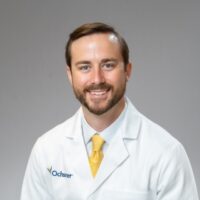
Ochsner Health is home to one of Louisiana’s few hematology/oncology groups where each specialist has disease-specific training. For Clark Alsfeld, MD, director of infusion and bone marrow harvest at Ochsner MD Anderson Cancer Center at The Gayle and Tom Benson Cancer Center, his primary area of focus is leukemias, a field in which advances in cellular therapy and stem cell transplants are transforming patient outcomes.
Equipped with leading-edge therapies, Dr. Alsfeld and colleagues partner with specialists across the health system and beyond to deliver multidisciplinary, holistic care that reflects a rapidly advancing field.
Dr. Alsfeld points to several recent innovations that have enhanced hematologic cancer care. For example, for decades, cytarabine and daunorubicin were the two main treatments for acute myeloid leukemia (AML). Since 2017, however, the Food and Drug Administration has approved 12 new medications for this disease.
“I expect that list to grow almost exponentially over the next few decades,” Dr. Alsfeld said. “With these new medications, we now have targeted therapies for AML that are more effective and less toxic, and so we expect outcomes to improve.”
In 2023, Ochsner MD Anderson became the first in Louisiana to offer CAR T-cell therapy for adults with hematologic cancers, including acute lymphoblastic leukemia, multiple myeloma and lymphomas.
“A perfect example of CAR T-cell therapy’s promise is patients with early relapsed lymphomas, who, historically, had a prognosis of about six months,” Dr. Alsfeld said. “Now, 80% of those who receive CAR T-cell therapy achieve remission, and approximately 40% of those patients are cured. That’s an incredible advancement.”
For patients, accessing the latest cellular therapies and transplant options poses a challenge, especially for patients in rural areas. Dr. Alsfeld has published research on the topic and works on solutions as a member of the American Society for Transplantation and Cellular Therapy’s Government Relations Committee.
“One of the great things about the interconnectedness of the Ochsner system is that I can be in my office in New Orleans and work with a local oncologist to provide the same high level of treatment patients would receive in the city,” he said. “I have access to patients’ records, labs, biopsies and vital signs, allowing me to provide real-time input to help address the access-to-care challenge.”
Another persistent challenge for some patients: finding a donor match when they need a stem cell transplant. Dr. Alsfeld worked with elected officials to pass a law improving education about and access to the NMDP (formerly Be the Match and National Marrow Donor Program) registry in Louisiana Office of Motor Vehicles locations.
A holistic approach helps define oncologic care at Ochsner. Multidisciplinary collaboration makes that approach possible. For example, more than 40 clinicians and ancillary providers gather every Wednesday for a stem cell transplant committee meeting. The group identifies how to solve pre- and post-transplant challenges and how to use resources, such as nutrition support and acupuncture, to improve quality of life.
The committee meetings include transplant infectious disease physicians, a unique layer of expertise.
“When treating immunocompromised patients who are going through transplants, we’re fortunate to have access to infectious disease physicians with additional training in transplant,” Dr. Alsfeld said. “They provide a deeper understanding of our patients’ needs.”
As advanced treatment options increase survival for many patients with hematologic cancers, particularly those with leukemia, addressing mental health concerns takes on even more importance. Ochsner MD Anderson is well-equipped to do just that.
“We’re one of the few centers with oncology-specific psychologists available,” Dr. Alsfeld said. “They see all of our stem cell transplant patients and are involved in caring for patients who don’t go to transplant as part of providing holistic care. We depend on these specially trained psychologists to help patients in the survivorship phase of their journey.”
Patients with hematologic cancer can access numerous clinical trials through Ochsner MD Anderson. One example Dr. Alsfeld is especially pleased to offer is an industry-based, Phase 2 trial of a menin inhibitor for leukemia.
“The early-phase clinical trial data were promising, and the second I saw the door was open for the Phase 2 trial, we reached out to the company and brought the trial to Ochsner MD Anderson,” Dr. Alsfeld said. “We’ve enrolled seven patients so far, giving them access to a great treatment option sooner. Two more patients have applied for compassionate use.”
Partnering with MD Anderson Cancer Center gives Dr. Alsfeld and his colleagues access to a deep well of expertise and insight into leading-edge research.
“We have a weekly meeting with MD Anderson’s leukemia group and a monthly hematology working group meeting with both MD Anderson and their other partner sites,” Dr. Alsfeld said. “These monthly meetings include roundtable discussions about ongoing research and opportunities to work collaboratively on new ideas to keep moving the needle in cancer care.”
As treatments for hematologic cancers continue advancing, Dr. Alsfeld envisions an expanded role for cellular therapy. CAR T-cell therapy, for example, may one day be an option for non-hematologic cancers and non-malignant diseases. Ochsner MD Anderson will play a key role in bringing the future of cancer care to Louisiana and Mississippi.
In the meantime, Dr. Alsfeld, a Louisiana native like many of his colleagues, looks forward to developing robust partnerships with community oncologists.
“I want to use the resources we have to help all patients across the state,” he said. “When I joined Ochsner MD Anderson, one thing that stuck out to me was everyone’s commitment to the same mission: working with our community partners to elevate cancer care in Louisiana, especially as newer treatment options become available.”
Learn more about what sets cancer care at Ochsner apart, or refer a patient.
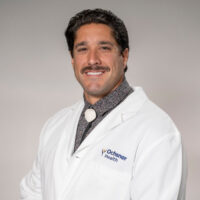
When orthopedic oncologist Guston Zervoudakis, MD, joined Ochsner Health in September 2025, he became, by his count, just the third such subspecialist in Louisiana. That dearth of skilled clinicians in this field presents a significant challenge for patients seeking bone and soft tissue cancer care in a largely rural state. As part of developing a world-class orthopedic oncology service at Ochsner, Dr. Zervoudakis is taking steps to alleviate the accessibility problem.
Growing up as an athlete with four rough-and-tumble brothers, Dr. Zervoudakis was exposed to and developed an affinity for orthopedic surgery early on. Later, he discovered a parallel passion.
“I spent two summers in North Carolina with my uncle, a surgical oncologist at East Carolina University,” Dr. Zervoudakis said. “I was drawn to oncology’s complexity, the uniqueness of each case and being able to help people at one of the scariest times of their lives. From then on, I combined my interests in orthopedic surgery and oncology.”
Dr. Zervoudakis never looked back. He joined Ochsner after completing an orthopedic oncology research fellowship at Florida’s Moffitt Cancer Center.
Bone and soft tissue tumors can threaten a person’s survival and functional ability. Survival takes precedence when making surgical decisions, but the quality of today’s therapies means patients rarely have to sacrifice functionality for lifesaving treatment.
“With advanced implant technologies and the limb-salvage techniques I learned during my training, I can achieve both optimal oncologic and functional outcomes with the same procedure,” Dr. Zervoudakis said. “It’s rare that I have to choose between the two.”
Many of Dr. Zervoudakis’ cases involve metastatic disease, an area where nonoperative therapies, such as targeted therapy and immunotherapy, have made a significant impact. Those therapies, in turn, pave the way for less-invasive procedures.
“I can now manage skeletal metastases with percutaneous fixation or radiofrequency ablation, approaches that may not have been available in the past,” Dr. Zervoudakis said. “The significance of this in treating pelvic metastases has been particularly impactful in an area where surgical resection is notoriously invasive and difficult to heal.”
Dr. Zervoudakis regards multidisciplinary care as oncology’s greatest strength because it enhances dialogue between specialists.
“Multidisciplinary care allows clinicians to view every patient from many different angles so we can provide the best possible treatment,” he said. “It’s both advantageous and necessary to bring together representatives from surgery, medical oncology, radiation oncology, radiology and other specialties to hear their viewpoints and collaborate.”
Each week, Dr. Zervoudakis participates in internal tumor boards focused on sarcomas and cutaneous tumors, among others. He also attends regular conferences with colleagues at MD Anderson Cancer Center as part of the collaboration between the world-renowned institution and The Gayle and Tom Benson Cancer Center at Ochsner. During these meetings, specialists review patients’ treatment plans and discuss ongoing research projects and future studies.
Dr. Zervoudakis helps prepare young physicians for their careers through Ochsner’s Graduate Medical Education Program. Two residents work with him in the clinic and the operating room as part of a combined joints and orthopedic oncology rotation.
“The residents learn to navigate diagnostic workup and management of orthopedic oncology cases in the clinic,” Dr. Zervoudakis said. “In the operating room, they hone surgical skills they can apply in whatever area of orthopedic surgery they choose to enter.”
Dr. Zervoudakis spent his research fellowship at Moffitt Cancer Center investigating metastatic disease, an area of inquiry he would like to continue at Ochsner. He also hopes to collaborate with teams at The Gayle and Tom Benson Cancer Center on researching pain management in skeletal disease to reduce opioid use, and liquid biopsies to diagnose and surveil cancer.
“Orthopedic oncology typically involves a lot of surveillance imaging and potential radiation,” Dr. Zervoudakis said. “Being able to supplement or replace much of that imaging with, potentially, a more objective measure like liquid biopsy would make surveillance more accurate and less invasive. We could monitor for cancer recurrence with blood draws instead of regular CTs or MRIs.”
For Louisianans, accessibility looms as the biggest barrier to receiving care for bone and soft tissue tumors. With the state’s orthopedic oncology services concentrated in New Orleans and Baton Rouge, residents in rural areas often face long drives to find care. Lack of transportation, child care or flexible work hours can make such trips unfeasible.
To help eliminate some of those barriers, Dr. Zervoudakis often conducts initial evaluations for patients from outlying areas via telemedicine. Patients can complete tests and imaging studies close to home before traveling to Ochsner for physical exams or surgeries when needed. This strategy supports Dr. Zervoudakis’ long-term vision of a spoke-and-hub system for orthopedic oncology in Louisiana, in which clinics across the state (the spokes) refer patients to hubs like Ochsner.
“Over the next five to 10 years, I really hope to build a referral network of spokes where patients can receive diagnostic care and a basic orthopedic oncology workup,” Dr. Zervoudakis said. “Then patients can come to the large hub centers for definitive or complex treatment. This system provides the best possible treatment for patients in the largest area.”
Learn more about the orthopedic oncology services available to your patients at Ochsner, or call 504-842-7436 to refer a patient.