Ochsner Health is the leading nonprofit healthcare provider in the Gulf South. Ochsner inspires healthier lives and stronger communities through our mission to serve, heal, lead, educate and innovate.
Pediatrics Articles from Ochsner Health Experts
At Ochsner Children’s, we provide accessible expertise to ensure your pediatric patients receive the most comprehensive care in the region from the No. 1 ranked hospital for kids in Louisiana. Our commitment to providing exceptional pediatric care is getting a new home. The Gayle and Tom Benson Ochsner Children’s Hospital is being designed for children and their families, ensuring an ideal experience for all. Ochsner Children’s expects to open the doors to its new home in early 2028.
Expanding the Reach of Cleft & Craniofacial Care
Learn how Michael Friel, MD, helped build Ochsner Health into a premier cleft and craniofacial care provider by drawing on his medical experiences.
Learn MorePediatric Otolaryngology Embraces Innovation & Access
Learn how Ochsner Health pediatric otolaryngologist John Carter, MD, is helping bring the latest ear, nose and throat care to children across Louisiana.
Learn MoreExpanding the Reach of Cleft & Craniofacial Care with Michael Friel, MD
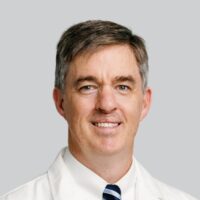
According to the Centers for Disease Control and Prevention, around 1 in 1,050 babies born in the U.S. have a cleft lip with or without a cleft palate, and around 1 in 1,600 have a cleft palate alone. For one Ochsner Health clinician, building a leading center to care for children with these congenital differences is personal.
Michael Friel, MD, director of pediatric plastic and craniofacial surgery at the Ochsner Children’s Hospital, was born with a bilateral cleft lip and palate. Years of repair surgeries, orthodontics and bone grafting followed. Seeing the skill and humility of the pediatric plastic surgeons and other clinicians who cared for him inspired Dr. Friel to pursue a medical career. Now, he finds himself in the role of the professionals he once admired, and he brings a unique perspective to the care of his patients.
“It’s quite emotional to perform a primary cleft lip repair,” Dr. Friel said. “Some parents have caught me tearing up when I talk with them after surgery. This repair can change a child’s life for 70 to 80 years. Certainly, it’s a little lagniappe to have walked the road of a patient with a cleft lip and palate. I don’t have to read about it to tell parents what it will be like. I can tell them what my life is like.”
Robust Growth Across an Integrated Network
Before Dr. Friel arrived in 2017, the cleft and craniofacial program treated a small number of infants each year. Now, the program serves hundreds of patients annually, including some from as far away as Georgia and North Texas. Seamless coordination across the Ochsner system delivers care beyond New Orleans to patients throughout Louisiana and Mississippi, including in Baton Rouge, Slidell, Lafayette, Jefferson, Covington and Hattiesburg.
“If I can drive 35 to 90 minutes to save 20 families from doing the same, I’m happy to do it,” Dr. Friel said. “The financial burden for some of our rural families to seek care is substantial. Visiting outlying clinics allows me to meet patients where they are, or at least meet them halfway.”
A direct nurse helpline and all-in-one patient portal enhance accessibility. “When patients call our phone line, there’s no phone tree to deal with,” Dr. Friel said. “My nurse answers the call, or patients can leave a voicemail and receive a call back. Our integrated patient portal system allows families to schedule appointments and follow-ups, send providers a message, and see their child’s imaging studies in real time.” As patient volumes have expanded, so has the cleft and craniofacial team. The group includes pediatric craniofacial and reconstructive surgeons, pediatricians, speech-language pathologists, pediatric otolaryngologists, pediatric neurosurgeons, dentists, orthodontists, audiologists, psychologists, geneticists, social workers and cleft team coordinators. Soon, the team will double its capacity to treat patients with cleft lip and palate by adding a second pediatric plastic surgeon and a third pediatric neurosurgeon.
Managing complex craniofacial conditions requires collaboration between pediatric neurosurgeons and plastic surgeons. The cleft and craniofacial program offers same-day, coordinated visits with both specialists.
Providing Complex Craniofacial Care
The cleft and craniofacial team treats numerous complex disorders, including rare ones, such as syndromic craniofacial conditions. According to Dr. Friel, the team treats these conditions in higher volumes than expected relative to the New Orleans and Louisiana populations, and he expects those volumes to increase as the team grows.
“Our team performs the most advanced minimal access techniques for craniofacial surgery, including spring cranioplasty, an option early on for multisuture syndromic craniosynostosis,” Dr. Friel said. “We also offer craniofacial distractions, LeFort 3 distraction and monobloc distraction.”
Dr. Friel also holds subspecialty board certification in hand surgery, allowing him to treat congenital hand differences in children with syndromic craniosynostosis.
Advancing the Field
Beyond the clinic and operating room, Dr. Friel shapes the future of cleft and craniofacial care and performs repair surgeries in far-flung corners of the world as part of medical missions.
Dr. Friel was the pediatric plastic surgery editor for Annals of Plastic Surgery for 10 years. He recently stepped down to focus on publishing his program’s results.
“I’m beginning to publish works based on our large dataset and patient outcomes,” Dr. Friel said. “This is exciting work with excellent statistical power and results that rival or exceed many traditional bastions of pediatric care throughout the country.”
This fall, Dr. Friel will present his work on syndromic craniosynostosis at the 21st Congress of the International Society of Craniofacial Surgeons in Shanghai.
Serving Abroad
Dr. Friel’s commitment to transforming the lives of children with cleft lip and palate has taken him on medical missions with nonprofits LEAP Global Missions and Operation Smile. He has treated children in Belize, China, the Dominican Republic, India, Paraguay and the Philippines, and will return to Belize with a medical team this fall.
“One of the wonderful things about plastic surgery is that I don’t need sophisticated robots or scopes to repair a cleft lip for a child who would otherwise have had no chance of treatment,” Dr. Friel said. “Thanks to advances in pediatric anesthesia, I can safely repair a cleft lip and palate in the developing world with a basic instrument setup and sutures. It’s one of the most rewarding parts of what I do.”
According to Dr. Friel, medical missions can include some of the most advanced surgeries performed anywhere. Some participating physicians see cleft volumes in their countries far exceeding those in the U.S. As a result, the potential for learning and exchanging ideas is “profound,” he said.
Additional Growth Ahead
Moving forward, Dr. Friel envisions the cleft and craniofacial program expanding its reach even further in Louisiana and Mississippi, especially as the team increases to two pediatric plastic surgeons and three pediatric neurosurgeons.
“I think we’ll begin to see more and more patients seeking our expertise for cleft and craniofacial conditions,” Dr. Friel said. “With the state-of-the-art Debra H. and Robert J. Patrick Neuroscience Institute opening in 2026 and the new Gayle and Tom Benson Ochsner Children’s Hospital following in 2028, this is an exciting time for our program.”
How to Refer
Learn more about pediatric plastic and reconstructive surgery at Ochsner, or refer a patient.
Pediatric Otolaryngology Embraces Innovation & Access
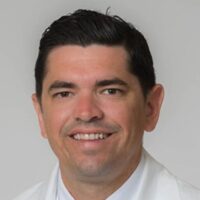
Pediatric otolaryngology is in an exciting era, with novel therapies becoming available and new techniques changing surgery. Pediatric otolaryngologist John Carter, MD, system chair of otolaryngology at Ochsner Health, believes Ochsner Health is well-positioned to help advance ear, nose and throat care for children and adults alike, thanks to the depth of its team.
From otolaryngologists and advanced practice providers to audiologists, speech-language pathologists, nurses and more, the otolaryngology team’s large size and diversity of expertise fuel exceptional patient care. That is why Dr. Carter has focused on enhancing the team since he began leading otolaryngology at Ochsner in 2022.
“I’m passionate about building people’s careers and finding the situations where they can be most successful,” he said. “We’re so fortunate in otolaryngology because we have some extremely talented surgeons walk through our door, and we want to get the most out of their potential. Staying focused on our team and putting the right pieces in place helps us achieve great outcomes.”
Drawn to the diversity of pediatric cases
Dr. Carter oversees the entire otolaryngology service, but his interest and expertise lie on the pediatric side. He performed his residency in otolaryngology at Tulane Medical Center and a pediatric otolaryngology fellowship at Northwestern University. His love of caring for children and desire to treat a wide range of conditions made pediatric otolaryngology a natural fit.
“Adult otolaryngology is divided into subspecialties,” Dr. Carter said. “For example, patients see a rhinologist if they have a tough nasal problem or a neurotologist for a challenging ear condition. In pediatric otolaryngology, though, I see many complex problems in my patients. Airway surgery, in particular, is extremely difficult but gratifying. Each airway is unique, like a snowflake, and surgery requires a lot of problem-solving in an ever-changing landscape.”
Surgery gets smaller
Like many surgical fields, pediatric otolaryngology operations are becoming increasingly less invasive. Ear surgery, for example, frequently uses endoscopes and other small instruments first introduced in sinus surgery decades ago.
“We use endoscopes instead of a microscope to perform transcanal ear surgery, making just one incision deep inside the ear,” Dr. Carter said. “The patient doesn’t see and hardly feels the incision. This approach usually results in less pain and a quicker recovery time.”
In airway surgery, smaller scopes and instruments allow pediatric otolaryngologists to perform more operations transorally and endoscopically rather than with an open technique. Open surgery, however, still has a prominent place in airway surgery. Dr. Carter and colleagues perform numerous complex open procedures, including laryngotracheal reconstruction and slide tracheoplasty to treat subglottic and tracheal stenosis.
Early adopters of emerging therapies
Sending clinicians to speak at local and national conferences and having a combined otolaryngology residency program with the Tulane University School of Medicine (one of the country’s oldest ear, nose and throat residencies) keeps Ochsner pediatric otolaryngology on the frontlines of innovation. Dr. Carter points to transoral robotic surgery for oropharyngeal cancer, hypoglossal nerve stimulators for obstructive sleep apnea, and dupilumab for nasal and sinus disease as examples of treatments that Ochsner was quick to adopt.
“We offer pediatric eustachian tube balloon dilation for children who’ve had multiple sets of ear tubes,” Dr. Carter said. “We’re also excited about medicine and vaccine advances for recurrent respiratory papillomatosis.”
Impactful leader
In Dr. Carter, Ochsner has a leader whose influence on pediatric otolaryngology is felt far beyond Louisiana. In addition to authoring dozens of peer-reviewed publications, Dr. Carter has helped build global agreement for addressing laryngomalacia, hearing loss, recurrent respiratory papillomatosis and problems with airway surgery.
“We developed international clinical consensus statements that pooled expert opinions so otolaryngologists could make sense of the wide breadth of literature,” Dr. Carter said. “These statements make clinical decision-making in everyday practice easier.”
Dr. Carter enjoys conducting studies that seek to prove the efficacy of a procedure or device, such as an extensive systematic review he performed on the use of eustachian tube balloon dilation. He describes demonstrating efficacy to insurers to help secure approval for novel treatments as “especially meaningful” given their potential to help his patients.
Centering patients & families
As a father of four young children, Dr. Carter understands the challenges parents can face when seeking complex specialty care for their children. He and his colleagues place children and their families at the center of care by streamlining access to needed services. The Pediatric Aerodigestive Program exemplifies this efficient, multidisciplinary approach. At the program’s namesake clinic, patients and families, who often travel from hours away, can see an otolaryngologist, pulmonologist, gastroenterologist, speech-language pathologist and nutritionist in one visit.
“With complex aerodigestive problems, many body systems have a critical interplay with each other,” Dr. Carter said. “We can’t fix the problem without input from the relevant specialists. Together, we can develop a coordinated solution so parents don’t get five discordant plans from five providers.”
Extending access through advocacy
Dr. Carter relishes advocating for policymakers to provide young patients with access to the latest treatment breakthroughs. He undertakes this work as governor of the Louisiana Academy of Otolaryngology - Head and Neck Surgery, the state society of the American Academy of Otolaryngology - Head and Neck Surgery®.
Of course, the availability of leading-edge care counts for little if specialists cannot reach pediatric patients who need their services. That is why Ochsner has hired more pediatric ear, nose and throat clinicians, including advanced practice providers, to increase access at satellite locations in Baton Rouge, Covington, Destrehan, Lake Terrace, Prairieville and the West Bank.
“For faraway communities throughout Louisiana, we’re working to create a virtual-first telemedicine option for patients,” Dr. Carter said. “We don’t want to replace local otolaryngologists for common problems. Instead, for complex pediatric ear, nose and throat issues, we want patients to be able to get a second opinion from us virtually. We would see the patient, review their imaging and decide if further diagnostic imaging studies are necessary. If the patient needed in-person care, such as surgery, we could see them in one of our satellite clinics closer to their home or at Ochsner Children’s Hospital in New Orleans for a major procedure.”
How to Refer
Learn more about what makes Ochsner pediatric otolaryngology services exceptional, or refer a patient.
