Ochsner Health is the leading nonprofit healthcare provider in the Gulf South. Ochsner inspires healthier lives and stronger communities through our mission to serve, heal, lead, educate and innovate.
Orthopedics Articles from Ochsner Health Experts
Our expert care, innovative treatments and collaborative teams combine to provide comprehensive solutions for musculoskeletal health and recovery. The Ochsner Andrews Sports Medicine Institute combines Ochsner’s award-winning sports medicine and orthopedic programs with renowned orthopedic surgeon Dr. James Andrews’ expertise, research and education platform. This partnership strengthens the best-in-class care for patients and athletes across Louisiana and Mississippi.
Leading Joint Replacement Program with Dr. George Chimento Is a Top Destination for Complex Patients Across the Gulf South
The joint replacement program at Ochsner Health is a top destination for patients in the Gulf South who need comprehensive care of simple and complex orthopedic conditions.
Learn MoreOrthopedic Oncology: Building a World-Class Program
Learn how Ochsner Health orthopedic oncologist Guston Zervoudakis, MD, is building a high-level program to increase accessibility for all Louisianans.
Learn MoreExplore Sports Medicine Care Built for Athletes and Active Patients of All Levels
The Ochsner-Andrews Sports Medicine Institute in Baton Rouge is a leading destination center for comprehensive orthopedic and sports medicine care
Learn MoreLeading Joint Replacement Program with Dr. George Chimento Is a Top Destination for Complex Patients Across the Gulf South
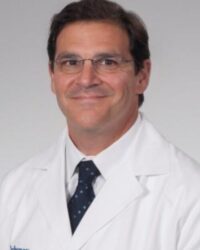
The joint replacement program at Ochsner Health is a top destination for patients in the Gulf South who need comprehensive care of simple and complex orthopedic conditions.
George F. Chimento, MD, system chair of orthopedic surgery at Ochsner Health and professor of orthopedic surgery at the Ochsner Clinical School –University of Queensland School of Medicine, is one of three fellowship-trained arthroplasty surgeons deeply committed to providing patients with high-quality, expert care.
The team’s arthroplasty offerings run the gamut from robotically assisted, minimally invasive, same-day procedures to complicated surgeries in medically complex cases referred from other facilities. The team is well versed in minimally invasive anterior and posterior approaches to the hip.
“My partners and I bring different surgical philosophies, techniques and areas of expertise to the table,” Dr. Chimento said. “Our unifying goal is to achieve excellent results through highly personalized care.”
Collaborative Care — Especially in Complex Cases
The joint replacement team at Ochsner works closely with multidisciplinary experts in areas that include:
- Trauma care
- Sports medicine
- Infectious diseases
- Plastic surgery
- Anesthesiology
- Internal medicine
- Physical therapy
Their collaborative approach is especially critical in the management of complex joint replacement, reconstruction and revision cases.
These cases include hip arthroplasties involving complex acetabular reconstructions that use custom implants or cup cages and proximal femoral replacements in cases of significant bone loss.
Dr. Chimento and his team also collaborate closely with sports medicine and trauma specialists to perform complex:
- Knee revisions that require patella tendon reconstruction, quadricep tendon reconstruction, or allografts.
The team receives a high volume of periprosthetic fracture cases from around the region. Many of these involve complex reconstructions and are planned and performed in collaboration with trauma surgeons and other specialists.
Outstanding Partnership with Anesthesia Experts
Over the past 25 years, joint replacement specialists at Ochsner have forged a close relationship with their elite group of regional anesthesiologists. Together, they bring today’s most cutting-edge anesthesia options to patients.
These advanced options include a combination of neuraxial anesthesia, regional blocks, peri-articular injections and multi-modal opioid sparing post operative medication regimens. These allow for speedier recovery and better outcomes.
Ochsner Health was an early pioneer of the surgical home model. Under this model, anesthesia and joint replacement clinicians medically co-manage most joint replacement patients during their hospital stay. In complex cases, Ochsner’s internists and hospital medicine specialists will step in to further strengthen medical management of hospitalized patients.
This combination of innovative anesthesia services and the surgical home model has helped Ochsner perform hundreds joint replacements annually including same-day outpatient procedures, without increases in complication or readmission rates.
A high volume of prosthetic joint infections are referred for treatment from around the region. A multidisciplinary approach is used, including a dedicated infectious disease team to ensure the best possible outcomes. A psychologist was recently added to help these patients deal with the anxiety and depression that is associated with PJI.
Deep Experience in Robotically Assisted Arthroplasty
Ochsner Health was the first hospital in the greater New Orleans area to acquire a Mako robot for joint replacement surgery. Ochsner has been using the robotic surgery system since 2013.
Ochsner also utilizes the VELYSTM Robotic-Assisted Solution for joint replacement surgeries, giving patients more options with different implants.
“We probably have the most experience in the region with robotically assisted hip replacements, unicompartmental knee replacements, and now total knee replacements,” Dr. Chimento said.
“We were a training site for Stryker, the manufacturers of Mako, and have always been at the forefront of robotics.”
Today, 80% to 90% of hip and knee arthroplasties performed by Dr. Chimento are robotically assisted. That percentage increased from 10% to 20% over the course of seven years, a testament to the efficiency of robotic surgery.
Short-term studies show that robotic joint replacement procedures result in quicker recovery times and lower rates of complications compared to traditional, non-robotic surgeries.
All three fellowship-trained joint replacement surgeons at Ochsner are highly experienced in performing robotic surgeries. Dr. Chimento emphasizes that manual procedures remain important, especially in patients whose preoperative functionality, deformity, or comorbidities make them poor candidates for robotic surgery. And some patients simply prefer to undergo manual procedures.
“Robotically assisted surgery will continue to evolve, making joint replacement surgery even more precise,” Dr. Chimento said. “The precision the robot offers is likely to improve outcomes tremendously and increase the longevity of prostheses.”
Driving Innovation through Robust Research
The joint replacement program at Ochsner Health invests heavily in research aimed at improving arthroplasty through innovation and increased efficiency.
In 2024 alone, the program produced 18 publications, 57 regional, national, and international presentations, and received two grants.
“Historically, most of our research for adult reconstruction total joints has been around providing value-based care,” Dr. Chimento said. “We’ve published studies evaluating how we achieved positive surgical outcomes without driving up costs.”
Dr. Chimento highlighted some of the program’s key research initiatives, including:
- A recently completed study to determine if nickel metal allergy is associated with poor outcomes in total knee arthroplasty
- An upcoming gait lab study to evaluate how soon patients can return to a normal gait, following total hip replacement procedures
- A study to improve Ochsner’s post-discharge readmission reduction program.
After determining that their existing protocol was resulting in too many unnecessary ER visits, Ochsner revamped and simplified the program, dramatically reducing unnecessary post-operative ER visits and lowering readmissions below the national benchmark.
Unique Center of Excellence Recognition
Ochsner Health is honored to be one of only a select few institutions nationwide recognized as a Center of Excellence (CoE) for national employer bundles, based on their patient volumes and clinical outcomes.
This means that several national companies direct their employees to Ochsner Health for joint replacement care. Ochsner holds the CoE designation for their joint replacement, spine surgery, and bariatric surgery programs.
Based on publicly available data, Ochsner was invited to apply for CoE recognition in joint replacement. Their volumes, overall outcomes, complication rates, and readmission rates were thoroughly evaluated as part of the process. Dr. Chimento and his two surgical colleagues also had to meet certain criteria for the program to receive CoE designation.
As part of the bundle, patients from as far away as Kansas, Oklahoma, and Texas travel to New Orleans to receive care at Ochsner Health. “We are honored to be recognized as a national Center of Excellence, and although travel surgery presents a unique set of issues,” Dr. Chimento said, “we have developed protocols and work closely with the patient’s local care team to ensure these patients get the best possible outcomes.”
How to Refer
To learn more about orthopedics and the joint replacement program at Ochsner Health, click here.
Orthopedic Oncology: Building a World-Class Program for Louisiana
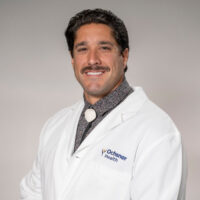
When orthopedic oncologist Guston Zervoudakis, MD, joined Ochsner Health in September 2025, he became, by his count, just the third such subspecialist in Louisiana. That dearth of skilled clinicians in this field presents a significant challenge for patients seeking bone and soft tissue cancer care in a largely rural state. As part of developing a world-class orthopedic oncology service at Ochsner, Dr. Zervoudakis is taking steps to alleviate the accessibility problem.
Combining dual interests
Growing up as an athlete with four rough-and-tumble brothers, Dr. Zervoudakis was exposed to and developed an affinity for orthopedic surgery early on. Later, he discovered a parallel passion.
“I spent two summers in North Carolina with my uncle, a surgical oncologist at East Carolina University,” Dr. Zervoudakis said. “I was drawn to oncology’s complexity, the uniqueness of each case and being able to help people at one of the scariest times of their lives. From then on, I combined my interests in orthopedic surgery and oncology.”
Dr. Zervoudakis never looked back. He joined Ochsner after completing an orthopedic oncology research fellowship at Florida’s Moffitt Cancer Center.
Optimizing surgical outcomes
Bone and soft tissue tumors can threaten a person’s survival and functional ability. Survival takes precedence when making surgical decisions, but the quality of today’s therapies means patients rarely have to sacrifice functionality for lifesaving treatment.
“With advanced implant technologies and the limb-salvage techniques I learned during my training, I can achieve both optimal oncologic and functional outcomes with the same procedure,” Dr. Zervoudakis said. “It’s rare that I have to choose between the two.”
Treatment’s less-invasive turn
Many of Dr. Zervoudakis’ cases involve metastatic disease, an area where nonoperative therapies, such as targeted therapy and immunotherapy, have made a significant impact. Those therapies, in turn, pave the way for less-invasive procedures.
“I can now manage skeletal metastases with percutaneous fixation or radiofrequency ablation, approaches that may not have been available in the past,” Dr. Zervoudakis said. “The significance of this in treating pelvic metastases has been particularly impactful in an area where surgical resection is notoriously invasive and difficult to heal.”
Committed to collaborative care
Dr. Zervoudakis regards multidisciplinary care as oncology’s greatest strength because it enhances dialogue between specialists.
“Multidisciplinary care allows clinicians to view every patient from many different angles so we can provide the best possible treatment,” he said. “It’s both advantageous and necessary to bring together representatives from surgery, medical oncology, radiation oncology, radiology and other specialties to hear their viewpoints and collaborate.”
Each week, Dr. Zervoudakis participates in internal tumor boards focused on sarcomas and cutaneous tumors, among others. He also attends regular conferences with colleagues at MD Anderson Cancer Center as part of the collaboration between the world-renowned institution and The Gayle and Tom Benson Cancer Center at Ochsner. During these meetings, specialists review patients’ treatment plans and discuss ongoing research projects and future studies.
Training the next generation
Dr. Zervoudakis helps prepare young physicians for their careers through Ochsner’s Graduate Medical Education Program. Two residents work with him in the clinic and the operating room as part of a combined joints and orthopedic oncology rotation.
“The residents learn to navigate diagnostic workup and management of orthopedic oncology cases in the clinic,” Dr. Zervoudakis said. “In the operating room, they hone surgical skills they can apply in whatever area of orthopedic surgery they choose to enter.”
Pathways for future research
Dr. Zervoudakis spent his research fellowship at Moffitt Cancer Center investigating metastatic disease, an area of inquiry he would like to continue at Ochsner. He also hopes to collaborate with teams at The Gayle and Tom Benson Cancer Center on researching pain management in skeletal disease to reduce opioid use, and liquid biopsies to diagnose and surveil cancer.
“Orthopedic oncology typically involves a lot of surveillance imaging and potential radiation,” Dr. Zervoudakis said. “Being able to supplement or replace much of that imaging with, potentially, a more objective measure like liquid biopsy would make surveillance more accurate and less invasive. We could monitor for cancer recurrence with blood draws instead of regular CTs or MRIs.”
Vision for a spoke-and-hub system to serve the state
For Louisianans, accessibility looms as the biggest barrier to receiving care for bone and soft tissue tumors. With the state’s orthopedic oncology services concentrated in New Orleans and Baton Rouge, residents in rural areas often face long drives to find care. Lack of transportation, child care or flexible work hours can make such trips unfeasible.
To help eliminate some of those barriers, Dr. Zervoudakis often conducts initial evaluations for patients from outlying areas via telemedicine. Patients can complete tests and imaging studies close to home before traveling to Ochsner for physical exams or surgeries when needed. This strategy supports Dr. Zervoudakis’ long-term vision of a spoke-and-hub system for orthopedic oncology in Louisiana, in which clinics across the state (the spokes) refer patients to hubs like Ochsner.
“Over the next five to 10 years, I really hope to build a referral network of spokes where patients can receive diagnostic care and a basic orthopedic oncology workup,” Dr. Zervoudakis said. “Then patients can come to the large hub centers for definitive or complex treatment. This system provides the best possible treatment for patients in the largest area.”
How to Refer
Learn more about the orthopedic oncology services available to your patients at Ochsner, or call 504-842-7436 to refer a patient.
Explore Sports Medicine Care Built for Athletes and Active Patients of All Levels
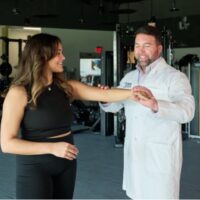
The Ochsner-Andrews Sports Medicine Institute in Baton Rouge is a leading destination center for comprehensive orthopedic and sports medicine care. From conservative therapies and rehabilitation to complex surgical procedures, Ochsner-Andrews delivers evidence-based, personalized treatment for every patient, from weekend warriors to elite athletes across Louisiana, including in New Orleans, Metairie, Gretna, Destrehan, LaPlace, Hammond, Baton Rouge, Lafayette, Shreveport and more.
Designed to meet the highest standards of performance medicine, this state-of-the-art facility provides access to advanced diagnostics, integrated care teams, and cutting-edge technologies under one roof. Founded on clinical excellence and a commitment to delivering the best care for each unique patient, Ochsner-Andrews touts a culture of collaboration and continuous improvement.
At the heart of a multidisciplinary team is Baton Rouge native Jeremy Burnham, MD, medical director of sports medicine and section head of orthopedic surgery in Baton Rouge.
"After training and working with world experts in ACL and knee surgery across the country, returning to Louisiana to bring high-level sports medicine expertise to Baton Rouge has been incredibly fulfilling," says Dr Burnham. "This region is passionate about sports, and being able to serve as a leader in sports medicine here is something special."
We sat down with Dr Burnham to discover how his expert team and innovative facility bridge the gap between injury, rehabilitation, and a full return to activity.
How does your multidisciplinary team "break down silos" to deliver a seamless patient experience?
When we designed this building, every decision was made with the patient journey in mind. We asked ourselves: What does it feel like to walk through the doors as a patient? Our goal was to create an experience that mirrors the level of coordinated, real-time care professional athletes receive.
In a high-performance training room, a multi-disciplinary team surrounds the athlete. Physicians, physical therapists, athletic trainers, and strength and conditioning coaches all contribute simultaneously. That model inspired our approach. We built an elite, integrated facility where our physical therapy gym, physician offices, and performance services share the same footprint. Everyone involved in a patient's care is right here, under one roof, collaborating in real time.
We're especially proud of our physical therapy team. Every therapist at this facility holds at least one advanced certification, either as an orthopedic certified specialist (OCS) or a sports certified specialist (SCS). In fact, our organization has the highest number of OCS- and SCS-certified therapists in the state.
Many of our therapists are former athletes themselves. They bring a deep understanding of both injury mechanics, and the performance demands our patients are working to return to. That lived experience informs every treatment plan.
How does this care model mirror what NFL or collegiate athletes receive? What does that mean for non-professional athletes?
When it comes to professional athletes, like those in the NFL, every day they are sidelined is a lost day in their career. It's not just time away from the field; it's time away from their livelihood. That has real implications.
So we don't take it lightly when we make decisions about keeping an athlete out of play. There's a responsibility to weigh not only physical recovery but also the impact on their career trajectory.
But this principle applies to anyone. Whether someone works at a desk, on their feet, or in any physically demanding profession, time away from work affects quality of life, income, and well-being.
Fortunately, much of the research and innovation aimed at accelerating elite athletes' recovery (cutting-edge surgical techniques, orthobiologics, platelet-rich plasma (PRP), bone marrow aspirate, and more) is now available to all patients.
Our philosophy is to deliver best-in-class care to everyone. If there's a way to shorten recovery time or improve outcomes, we pursue it. We don't default to the path of least resistance. We actively look for what will truly make a difference in that patient's life.
Can you share a success story where professional-level tools or strategies made a difference for a general patient?
We’ve recently developed a novel technique in ACL reconstruction that incorporates biologic tissue to enhance recovery outcomes. Traditionally, ACL surgery in younger patients involves autograft reconstruction. While this approach is helpful for graft durability and integration, it does create a secondary site of injury. The donor site can become a limiting factor in rehabilitation and delay the return to sport.
To address this, we secured grant funding to study the application of biologic tissue (specifically, amniotic and umbilical-derived grafts obtained from consenting live births) in the graft harvest site. These tissues are rich in regenerative factors and have shown significant promise in enhancing healing.
Preliminary studies suggest that applying these biologics at the harvest site may markedly accelerate muscle recovery, resulting in faster rehabilitation and return to sport. While this approach initially gained interest in the professional and collegiate athlete population, the same benefits would apply to high school athletes and recreational patients as well. To our knowledge, we are the first in the world to study this application specifically that specific site of the knee.
Why has Ochsner Andrews become a regional destination for ACL treatment and recovery?
At our ACL Center of Excellence, we believe that optimal recovery from ACL injuries requires a comprehensive, team-based approach. While surgical expertise is a critical component—and we are proud to deliver innovative, high-quality surgical care—the recovery process extends beyond the operating room.
Our multidisciplinary model integrates orthopedic surgeons, physical therapists, strength and conditioning coaches, and athletic trainers, all working together.
We also leverage advanced technology to monitor and guide return-to-play readiness. Patients undergo regular, objective testing that includes 3D motion analysis, force plate evaluation, and 1080 Sprint testing. In the past, movement patterns after ACL injury were difficult to quantify. These state of the art tools enable us to track rehabilitation progress, minimize the risk of reinjury, and maximize outcomes and performance.
Can you talk about your team’s role in national clinical research and how that translates to better care locally?
We’ve built a strong research infrastructure here, supported by a dedicated team that includes research fellows from across the country and around the world. The caliber of individuals who choose to train with us speaks volumes. In the last 12 months, we have presented our research internationally, nationally, and published in several scientific journals.
One example is our development of a simple, cost-effective two-minute functional screening test. It’s designed to be easily implemented by coaches, enabling them to quickly identify athletes at higher risk for lower extremity and ACL injuries. We've spent the past five years studying the test, and our data confirm its effectiveness in predicting injury risk.
Prevention is always the ultimate goal. As much as we focus on treating injuries like ACL tears, it’s far better if we can prevent them altogether.
This project reflects the strength of our team in developing the concept, validating it through high-quality research, and now presenting our findings internationally. I recently shared this work at a major sports medicine conference in Germany and again at AOSSM in Nashville. It’s rewarding to see our research making an impact not just in Louisiana, but on a national and global stage.
