About Ochsner
Ochsner Health is the leading nonprofit healthcare provider in the Gulf South. Ochsner inspires healthier lives and stronger communities through our mission to serve, heal, lead, educate and innovate.
At Ochsner Children’s, we provide accessible expertise to ensure your pediatric patients receive the most comprehensive care in the region. Our commitment to providing exceptional pediatric care is getting a new home. The Gayle and Tom Benson Ochsner Children’s Hospital is being designed for children and their families, ensuring an ideal experience for all. Ochsner Children’s expects to open the doors to its new home in early 2028.

Leading in pediatric cardiology is deeply ingrained in the fabric of Ochsner Health. We established our pediatric heart transplant program in 1985, 15 years after performing Louisiana’s first adult heart transplant. Four decades later, our pediatric heart transplant program is still the only one in the state.
As we move toward the opening of The Gayle and Tom Benson Ochsner Children’s Hospital in 2028, leaders like pediatric cardiologist Craig Sable, MD, are carrying forward the spirit of innovation in children’s cardiac care. Dr. Sable is academic associate chair of pediatrics, co-director of the Congenital Heart Center Leadership Council and director of regional cardiovascular outreach and telemedicine at Ochsner Children’s Hospital. He values Ochsner’s ability to form decades-long relationships with patients who have congenital heart disease, which comprises many of the cases he and his colleagues treat.
“Congenital heart disease affects a huge range of patients, from those diagnosed early in fetal life to those living with it as adults,” Dr. Sable said. “We care for patients across the lifespan and spectrum of care, from diagnosing children as outpatients and treating them in the intensive care unit to nurturing families over time as they navigate complex congenital heart disease.”
Over the past two decades, echocardiography, the go-to diagnostic tool for pediatric cardiologists, has seen significant advances, enabling increasingly detailed images of the smallest patients. At Ochsner, for example, clinicians use fetal echocardiography to detect congenital heart disease early, allowing them to counsel families on and better prepare for treatment.
Another rapidly advancing field of imaging, cross-sectional imaging using MRI and CT, has had a “huge impact” on pediatric cardiology, according to Dr. Sable.
“The ability to obtain cross-sectional images makes planning and executing heart surgery and interventional catheterization much more successful,” he said. “At Ochsner, world experts obtain phenomenal pictures with cardiac MRI and CT. We can use these images to print 3D models of the heart, creating a complete surgical roadmap. We can even create these models for fetal hearts using MRI images.”
At Ochsner, we offer a comprehensive range of pediatric cardiac interventions, from delicate, catheter-based procedures to close abnormal blood vessels in babies weighing as little as 1 pound, to complex heart surgeries utilizing some of the most innovative devices available. Our treatment expertise is one reason U.S. News & World Report consistently ranks Ochsner among the country’s best pediatric cardiology and pediatric cardiothoracic surgery programs.
Our use of the Amplatzer Piccolo™ Occluder to treat patent ductus arteriosus in premature infants is a prime example of our incorporation of innovative therapies. Previously, treatment options for these patients included ibuprofen and acetaminophen, which could cause significant side effects, or closed-heart surgery, according to Dr. Sable.
“The Piccolo device has changed the field significantly by allowing us to close the ductus arteriosus in a minimally invasive fashion in the cath lab,” he said. “Once babies are two or three weeks old, if the ductus arteriosus is still open and causing heart problems, we can close it with a device that’s about one-tenth the size of a fingernail. We have performed more than 200 Piccolo procedures at Ochsner, giving us, probably, some of the most experience in the world. Our success rate is more than 99%.”
Ochsner pediatric cardiac experts presented their Piccolo and neonatal heart surgery outcomes at the 9th World Congress of Pediatric Cardiology & Cardiac Surgery in December 2025 in Hong Kong.
Children with heart disease have the greatest opportunity to thrive when they have a multispecialty team on their side, and that is what we provide at Ochsner. From highly specialized services, such as fetal cardiology, the Single Ventricle Program and the Michael R. Boh Center for Child Development, to ancillary programs like child life, we provide holistic care. Our collaborative ethos extends from weekly multidisciplinary meetings, where the entire team discusses pediatric cardiology cases, to the operating room.
“When a patient needs heart surgery, they have a team of physicians and nurses in the ICU, and another team in the OR that includes the heart surgeon, anesthesiologist, perfusionists and nurses,” Dr. Sable said. “I compare it to a symphony. Everyone is in sync and works together to ensure the patient can have a successful outcome.”
Dr. Sable has devoted a significant portion of his career to improving access to cardiac surgery and preventing rheumatic heart disease in some of the world’s poorest regions. He estimates that around half of the approximately 200 academic papers he has published focused on these efforts. He has made 50 trips to Uganda, participating in as many as 3,000 heart surgeries, administering penicillin to thousands of children (thereby helping prevent the need for surgery in those with early rheumatic heart disease) and training clinicians to image children’s hearts using handheld echocardiography machines.
Practicing medicine in the Global South, he said, deepened his commitment to providing cost-effective, efficient and individualized care at home in Louisiana. He hopes more clinicians, both Ugandan and American, can nurture a global perspective on healthcare. To that end, he is exploring the possibility of establishing a collaboration between a medical school in Uganda and the recently established Xavier Ochsner College of Medicine, where he serves as a professor of pediatrics.
Furthering our academic partnership with Xavier University of Louisiana is just part of Dr. Sable’s vision for the future of pediatric cardiology at Ochsner. He also plans to expand the program’s faculty and research portfolio, and create a regional pediatric cardiology footprint stretching from Mobile, Alabama, through Mississippi to northern Louisiana.
“A key focus is extending our telemedicine service to the community hospitals where babies are born throughout our region,” Dr. Sable said. “We also want to expand our fetal echocardiography presence, which would help us diagnose more cases of congenital heart disease early and allow us to plan treatment more effectively.”
Learn more about our nationally recognized pediatric cardiac care, or refer a patient.

For Ochsner Children’s Health Center - New Orleans pediatric gastroenterologist Matthew Giefer, MD, caring for children with gastrointestinal disorders allows him to weave together multiple professional threads.
“I chose to specialize in pediatric GI because I wanted to improve outcomes for children with complex digestive and pancreatic disorders through a mix of clinical care, procedural innovation, teaching and research,” Dr. Giefer said. “My work leading pediatric endoscopy and participating in multicenter research has allowed me to translate discoveries into better diagnostics, therapies and training.”
Those are needed more urgently than ever, as children in Louisiana face what Dr. Giefer calls a “substantial” burden of GI disease compounded by a growing pediatric population and scarce pediatric GI subspecialists. To ensure patients receive top-level care, Dr. Giefer and his colleagues have built the state’s premier pediatric GI program, which helped Ochsner Children’s Hospital earn national recognition for Gastroenterology & GI Surgery in U.S. News & World Report’s 2025–2026 Best Children’s Hospital rankings. Multidisciplinary, disease-specific programs have played a crucial role in this effort.
Our pediatric GI clinicians offer numerous programs dedicated to specific diseases, ranging from alpha-1 antitrypsin deficiency to aerodigestive conditions and colorectal disorders. Other programs and clinics focus on:
The programs and clinics include support from behavioral health experts, who help patients manage depression and other mental health conditions that can accompany GI disease. The pediatric GI program continues to expand its capabilities, including the recent establishment of programs in neurogastroenterology and pancreaticobiliary disease.
“Condition-specific programs matter because they concentrate expertise, standardize care and streamline multidisciplinary coordination,” Dr. Giefer said. “Patients benefit from unified care plans and excellent communication among the care team. Programs like ours are also extremely important for families that seek care from outside New Orleans because they can get expert input from multiple providers in one trip.”
Dr. Giefer treats the full range of pediatric GI diseases, from common conditions, such as recurrent abdominal pain, to rare ones, like recurrent or chronic pancreatitis. He has a special interest in this condition.
“Over my career, there has been an increased recognition of pancreatitis in children,” Dr. Giefer said. “We used to think this disease was quite rare, but it turns out that we weren’t doing a good job looking for it. The most common etiology in children, which is genetics, is not thought to be a common cause in adults, so we had to completely reframe how we think about this disease in kids.”
As a leader of the multicenter, international INSPPIRE pediatric pancreatitis study, Dr. Giefer helped further clinicians’ understanding of this condition, including the key role that genetics plays in children with recurrent or chronic disease.
“My group and I showed that 71% of children with recurrent or chronic pancreatitis had one of the four most common genetic risk factors for the disease,” he said. “We knew genetics were important, but we wouldn’t have guessed they were more important than any other risk factor.”
According to Dr. Giefer, the pancreatitis program at Ochsner Children’s is unique for bringing together the INSPPIRE research, provider expertise, advanced endoscopy capabilities and an inpatient care protocol proven to reduce complications and shorten hospitalizations.
The success of the disease-specific pediatric GI programs hinges on cross-specialty collaboration involving pediatric surgery, radiology, nutrition, pain medicine, psychology, otolaryngology, infectious disease and primary care. Specialists and subspecialists use joint care pathways and participate in collaborative procedure planning and case conferences, optimizing outcomes and preventing siloed care.
“An excellent example of our collaborative approach to care is the unique way we handle situations when children need both endoscopic retrograde cholangiopancreatography, which is one of the procedures I perform, and cholecystectomy,” Dr. Giefer said. “Typically, clinicians perform these procedures with two separate anesthetics over two or more days. However, the surgeons and I perform them under a single anesthetic. There is no doubt that this approach is better for children. They get all the interventions they need and nothing they don’t, and they leave the hospital sooner.”
Dr. Giefer is a passionate advocate for children with GI diseases. In 2020, he helped shepherd a bill through the Louisiana Legislature requiring insurers to cover disease-specific medications in children (assuming safety and efficacy data are available) if the companies also cover them to treat the same diseases in adults. The bill went on to become law.
That spirit of advocacy drives the entire pediatric GI team at Ochsner Children’s. From creating dedicated programs to better serve patients to shaping tomorrow’s experts through the Xavier Ochsner College of Medicine, the pediatric GI program is on an upward trajectory.
“Ochsner is on the path to becoming a regional and national referral center for pediatric GI diseases,” Dr. Giefer said. “We are doing this by expanding our multidisciplinary programs and research, refining clinical pathways, and training the next generation of clinicians.”
Learn more about our nationally recognized pediatric GI care, or refer a patient.
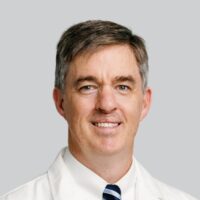
According to the Centers for Disease Control and Prevention, around 1 in 1,050 babies born in the U.S. have a cleft lip with or without a cleft palate, and around 1 in 1,600 have a cleft palate alone. For one Ochsner Health clinician, building a leading center to care for children with these congenital differences is personal.
Michael Friel, MD, director of pediatric plastic and craniofacial surgery at the Ochsner Children’s Hospital, was born with a bilateral cleft lip and palate. Years of repair surgeries, orthodontics and bone grafting followed. Seeing the skill and humility of the pediatric plastic surgeons and other clinicians who cared for him inspired Dr. Friel to pursue a medical career. Now, he finds himself in the role of the professionals he once admired, and he brings a unique perspective to the care of his patients.
“It’s quite emotional to perform a primary cleft lip repair,” Dr. Friel said. “Some parents have caught me tearing up when I talk with them after surgery. This repair can change a child’s life for 70 to 80 years. Certainly, it’s a little lagniappe to have walked the road of a patient with a cleft lip and palate. I don’t have to read about it to tell parents what it will be like. I can tell them what my life is like.”
Before Dr. Friel arrived in 2017, the cleft and craniofacial program treated a small number of infants each year. Now, the program serves hundreds of patients annually, including some from as far away as Georgia and North Texas. Seamless coordination across the Ochsner system delivers care beyond New Orleans to patients throughout Louisiana and Mississippi, including in Baton Rouge, Slidell, Lafayette, Jefferson, Covington and Hattiesburg.
“If I can drive 35 to 90 minutes to save 20 families from doing the same, I’m happy to do it,” Dr. Friel said. “The financial burden for some of our rural families to seek care is substantial. Visiting outlying clinics allows me to meet patients where they are, or at least meet them halfway.”
A direct nurse helpline and all-in-one patient portal enhance accessibility. “When patients call our phone line, there’s no phone tree to deal with,” Dr. Friel said. “My nurse answers the call, or patients can leave a voicemail and receive a call back. Our integrated patient portal system allows families to schedule appointments and follow-ups, send providers a message, and see their child’s imaging studies in real time.” As patient volumes have expanded, so has the cleft and craniofacial team. The group includes pediatric craniofacial and reconstructive surgeons, pediatricians, speech-language pathologists, pediatric otolaryngologists, pediatric neurosurgeons, dentists, orthodontists, audiologists, psychologists, geneticists, social workers and cleft team coordinators. Soon, the team will double its capacity to treat patients with cleft lip and palate by adding a second pediatric plastic surgeon and a third pediatric neurosurgeon.
Managing complex craniofacial conditions requires collaboration between pediatric neurosurgeons and plastic surgeons. The cleft and craniofacial program offers same-day, coordinated visits with both specialists.
The cleft and craniofacial team treats numerous complex disorders, including rare ones, such as syndromic craniofacial conditions. According to Dr. Friel, the team treats these conditions in higher volumes than expected relative to the New Orleans and Louisiana populations, and he expects those volumes to increase as the team grows.
“Our team performs the most advanced minimal access techniques for craniofacial surgery, including spring cranioplasty, an option early on for multisuture syndromic craniosynostosis,” Dr. Friel said. “We also offer craniofacial distractions, LeFort 3 distraction and monobloc distraction.”
Dr. Friel also holds subspecialty board certification in hand surgery, allowing him to treat congenital hand differences in children with syndromic craniosynostosis.
Beyond the clinic and operating room, Dr. Friel shapes the future of cleft and craniofacial care and performs repair surgeries in far-flung corners of the world as part of medical missions.
Dr. Friel was the pediatric plastic surgery editor for Annals of Plastic Surgery for 10 years. He recently stepped down to focus on publishing his program’s results.
“I’m beginning to publish works based on our large dataset and patient outcomes,” Dr. Friel said. “This is exciting work with excellent statistical power and results that rival or exceed many traditional bastions of pediatric care throughout the country.”
This fall, Dr. Friel will present his work on syndromic craniosynostosis at the 21st Congress of the International Society of Craniofacial Surgeons in Shanghai.
Dr. Friel’s commitment to transforming the lives of children with cleft lip and palate has taken him on medical missions with nonprofits LEAP Global Missions and Operation Smile. He has treated children in Belize, China, the Dominican Republic, India, Paraguay and the Philippines, and will return to Belize with a medical team this fall.
“One of the wonderful things about plastic surgery is that I don’t need sophisticated robots or scopes to repair a cleft lip for a child who would otherwise have had no chance of treatment,” Dr. Friel said. “Thanks to advances in pediatric anesthesia, I can safely repair a cleft lip and palate in the developing world with a basic instrument setup and sutures. It’s one of the most rewarding parts of what I do.”
According to Dr. Friel, medical missions can include some of the most advanced surgeries performed anywhere. Some participating physicians see cleft volumes in their countries far exceeding those in the U.S. As a result, the potential for learning and exchanging ideas is “profound,” he said.
Moving forward, Dr. Friel envisions the cleft and craniofacial program expanding its reach even further in Louisiana and Mississippi, especially as the team increases to two pediatric plastic surgeons and three pediatric neurosurgeons.
“I think we’ll begin to see more and more patients seeking our expertise for cleft and craniofacial conditions,” Dr. Friel said. “With the state-of-the-art Debra H. and Robert J. Patrick Neuroscience Institute opening in 2026 and the new Gayle and Tom Benson Ochsner Children’s Hospital following in 2028, this is an exciting time for our program.”
Learn more about pediatric plastic and reconstructive surgery at Ochsner, or refer a patient.
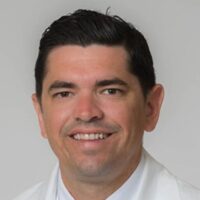
Pediatric otolaryngology is in an exciting era, with novel therapies becoming available and new techniques changing surgery. Pediatric otolaryngologist John Carter, MD, system chair of otolaryngology at Ochsner Health, believes Ochsner Health is well-positioned to help advance ear, nose and throat care for children and adults alike, thanks to the depth of its team.
From otolaryngologists and advanced practice providers to audiologists, speech-language pathologists, nurses and more, the otolaryngology team’s large size and diversity of expertise fuel exceptional patient care. That is why Dr. Carter has focused on enhancing the team since he began leading otolaryngology at Ochsner in 2022.
“I’m passionate about building people’s careers and finding the situations where they can be most successful,” he said. “We’re so fortunate in otolaryngology because we have some extremely talented surgeons walk through our door, and we want to get the most out of their potential. Staying focused on our team and putting the right pieces in place helps us achieve great outcomes.”
Dr. Carter oversees the entire otolaryngology service, but his interest and expertise lie on the pediatric side. He performed his residency in otolaryngology at Tulane Medical Center and a pediatric otolaryngology fellowship at Northwestern University. His love of caring for children and desire to treat a wide range of conditions made pediatric otolaryngology a natural fit.
“Adult otolaryngology is divided into subspecialties,” Dr. Carter said. “For example, patients see a rhinologist if they have a tough nasal problem or a neurotologist for a challenging ear condition. In pediatric otolaryngology, though, I see many complex problems in my patients. Airway surgery, in particular, is extremely difficult but gratifying. Each airway is unique, like a snowflake, and surgery requires a lot of problem-solving in an ever-changing landscape.”
Like many surgical fields, pediatric otolaryngology operations are becoming increasingly less invasive. Ear surgery, for example, frequently uses endoscopes and other small instruments first introduced in sinus surgery decades ago.
“We use endoscopes instead of a microscope to perform transcanal ear surgery, making just one incision deep inside the ear,” Dr. Carter said. “The patient doesn’t see and hardly feels the incision. This approach usually results in less pain and a quicker recovery time.”
In airway surgery, smaller scopes and instruments allow pediatric otolaryngologists to perform more operations transorally and endoscopically rather than with an open technique. Open surgery, however, still has a prominent place in airway surgery. Dr. Carter and colleagues perform numerous complex open procedures, including laryngotracheal reconstruction and slide tracheoplasty to treat subglottic and tracheal stenosis.
Sending clinicians to speak at local and national conferences and having a combined otolaryngology residency program with the Tulane University School of Medicine (one of the country’s oldest ear, nose and throat residencies) keeps Ochsner pediatric otolaryngology on the frontlines of innovation. Dr. Carter points to transoral robotic surgery for oropharyngeal cancer, hypoglossal nerve stimulators for obstructive sleep apnea, and dupilumab for nasal and sinus disease as examples of treatments that Ochsner was quick to adopt.
“We offer pediatric eustachian tube balloon dilation for children who’ve had multiple sets of ear tubes,” Dr. Carter said. “We’re also excited about medicine and vaccine advances for recurrent respiratory papillomatosis.”
In Dr. Carter, Ochsner has a leader whose influence on pediatric otolaryngology is felt far beyond Louisiana. In addition to authoring dozens of peer-reviewed publications, Dr. Carter has helped build global agreement for addressing laryngomalacia, hearing loss, recurrent respiratory papillomatosis and problems with airway surgery.
“We developed international clinical consensus statements that pooled expert opinions so otolaryngologists could make sense of the wide breadth of literature,” Dr. Carter said. “These statements make clinical decision-making in everyday practice easier.”
Dr. Carter enjoys conducting studies that seek to prove the efficacy of a procedure or device, such as an extensive systematic review he performed on the use of eustachian tube balloon dilation. He describes demonstrating efficacy to insurers to help secure approval for novel treatments as “especially meaningful” given their potential to help his patients.
As a father of four young children, Dr. Carter understands the challenges parents can face when seeking complex specialty care for their children. He and his colleagues place children and their families at the center of care by streamlining access to needed services. The Pediatric Aerodigestive Program exemplifies this efficient, multidisciplinary approach. At the program’s namesake clinic, patients and families, who often travel from hours away, can see an otolaryngologist, pulmonologist, gastroenterologist, speech-language pathologist and nutritionist in one visit.
“With complex aerodigestive problems, many body systems have a critical interplay with each other,” Dr. Carter said. “We can’t fix the problem without input from the relevant specialists. Together, we can develop a coordinated solution so parents don’t get five discordant plans from five providers.”
Dr. Carter relishes advocating for policymakers to provide young patients with access to the latest treatment breakthroughs. He undertakes this work as governor of the Louisiana Academy of Otolaryngology - Head and Neck Surgery, the state society of the American Academy of Otolaryngology - Head and Neck Surgery®.
Of course, the availability of leading-edge care counts for little if specialists cannot reach pediatric patients who need their services. That is why Ochsner has hired more pediatric ear, nose and throat clinicians, including advanced practice providers, to increase access at satellite locations in Baton Rouge, Covington, Destrehan, Lake Terrace, Prairieville and the West Bank.
“For faraway communities throughout Louisiana, we’re working to create a virtual-first telemedicine option for patients,” Dr. Carter said. “We don’t want to replace local otolaryngologists for common problems. Instead, for complex pediatric ear, nose and throat issues, we want patients to be able to get a second opinion from us virtually. We would see the patient, review their imaging and decide if further diagnostic imaging studies are necessary. If the patient needed in-person care, such as surgery, we could see them in one of our satellite clinics closer to their home or at Ochsner Children’s Hospital in New Orleans for a major procedure.”
Learn more about what makes Ochsner pediatric otolaryngology services exceptional, or refer a patient.